Posts

Showing posts with the label remote pilot

10 Tips for Beginner Drone Pilots - 016
Image
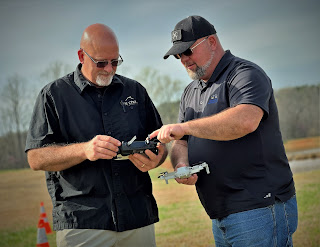
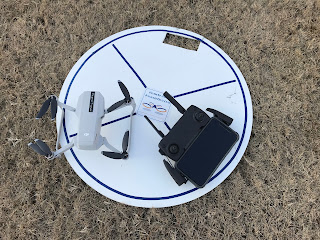
Welcome to drone flying new drone pilots, you have embarked on an exciting journey no matter what type of drone flying you want to do such as, recreational RC park flying, start an aerial photography/videography business, or First Person View (FPV) racing, just to name a few. The world of drone flying in the US is changing dramatically this year with respect to the regulatory scene. In this article we offer 10 tips, mostly flying tips, for new drone pilots.   Source: Gary Rosson, Earth View Drone Imaging The later part of the article we will discuss the regulatory side of the equation. Let’s jump in feet first with the Top 10 Tips: 1. Consider hiring a flight instructor or searching out a mentor  to learn the basics. One of my best customers said upon our first lesson, “I would rather crash your drone than mine.” It took me a minute to get over this barb, but a selling point is a selling point. In all seriousness, in addition to being under the watchful eye of an instructor or...
Drone Regulations: What You Need to Know Before You Fly - 010

Image
  Drone regulations are becoming more complicated by the minute. In this article we will dispel some of the misconceptions and outline what you need to know to fly legal and safe. Regulators, along with industry participation, develop a basic framework of rules, then as issues arise, like accidents and incidence, regulations are expanded to meet the new need. However, regulations are not born with the simple stroke of a pen, it consists of a process of establishing a Noticed of Proposed Rulemaking (NPRM), allowing the public to comment and regulators respond to comments way before a regulation makes it to the books. Much of our discussion will center on recreational drone pilots. However, we will encapsulate the resources necessary for those wanting to make money with their drone by earning commercial Remote drone Pilot certification (a.k.a. Part 107, as in the regulation covering the topic, certification).    Due to the mass of folks flying in places where they shouldn’t...

A Comprehensive Guide to Choosing the Best Drone for Your Needs - 009

Image
  Talk about a soapbox issue, choosing the best drone for your needs is one of those topics. I’m frequently asked about drone recommendations from students in our commercial certification prep and flight training classes. Some have said to me, “When I save up enough money to buy X drone, then I’ll start my business.” IMHO, this is Bull-Hockey! Some people have the need to be the “trailblazers” when a new product comes out on the market, to each their own. I was guilty of this mentality in high school when we would debate the 0 to 60 (mph) times of the latest sportscars on the market. Someone would have the latest news from one of the magazines stating something like, “Did you hear that the new engine in the Mustang beat last year’s model by .2 seconds?” While there is a place for the “latest and greatest,” purchases should be made objectively by asking, “Will the feature(s) enhance what it is I’m trying to do with it (FPV drone racing, high wind tolerance)? Will this drone make my ...

Understanding Surface Based Class E Airspace - 005

Image
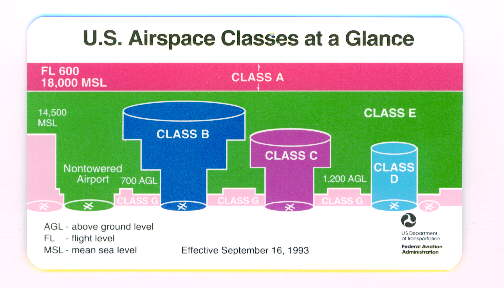
  Written in-light of  Drone Safety Awareness Week, November 16-22, 2020 In my Remote drone Pilot certification classes, teaching the basics of Class E airspace isn’t so bad; I simply refer to it as the primary airspace that’s the filler between the other airspace types, starting at either 700’ or 1,200’ Above Ground Level (AGL) and generally extending to the base of Class A at Flight Level 180, or 18,000’ Mean Sea Level (MSL). However, when it comes to Surface Based Class E, the magenta dashed lines around an airport, it reminds me of English class in primary school. The teacher would say something to the effect of, “The rule is X,” and I would get what she was saying. Then she would say, “Unless it’s this case, or this case, or that case,” and then I would be totally confused. Well, unfortunately this is the case with Surface Based Class E where basically the rule book gets thrown out. Never-the-less, I think we can give you an explanation that will help you learn this uniqu...

Helping Customers Succeed Through Good Pre-Flight Planning - 004

Image
  I vividly remember being in kindergarten during play time, the teacher said we could choose anything we wanted to do for the remainder of the morning. After playtime we would have lunch followed by a nap, which sounds like a great plan today as much as it did as a five year old.    Source: RemotePilotAssociation.com My favorite playtime activity was play with blocks, building great structures, in my humble opinion, was the best. On that day I had a plan in my head to build a twisting and turning road complete with a cool bridge. The teacher paired us up into two person groups and paired Timmy and myself up, which was good because he was a friend. I went to Timmy with full exuberance trying to explain “the plan” but stumbled upon my words frustrating myself and proclaimed to just show him what I was wanting to do. Fortunately Timmy was a good hearted willing sport and played along, seeming to be happy as a clam playing with the blocks. He acted as an assistant of sorts t...

Why I Don't Recommend LAANC - 003 (Updated July 23, 2023)

Image
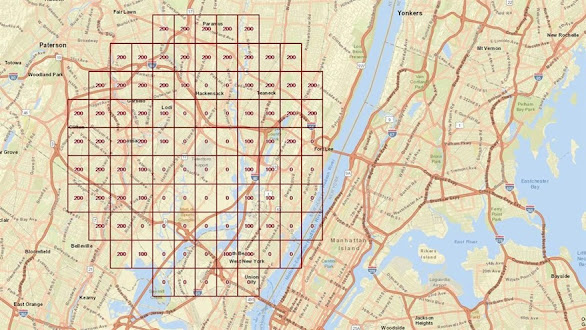
Don't get me wrong Low Altitude Authorization and Notification Capability (LAANC) is a great tool as it allows for much quicker access to air traffic controlled airspace. In the past the process for getting access required submitting a waiver, which could take up to 90 days to process. However, I don’t recommend this for every pilot.  Sadly, according to a Drone XL article only 20 to 30 percent of drone pilots are complying, or using, LAANC according to an Aloft company study, in ATC controlled airspace when they should be using the app. In other words, there are 70 to 80 percent of the drone pilots violating ATC controlled airspace. Source: interdrone, LAANC example What is LAANC and how does it work? As you know, airspace that is controlled by Air Traffic Control (ATC), Class B, C, D and sometimes surface based E airspace requires ATC approval. Approvals in the past were not efficient thus a new system called LAANC was developed to give drone pilots quicker and more extensive acc...